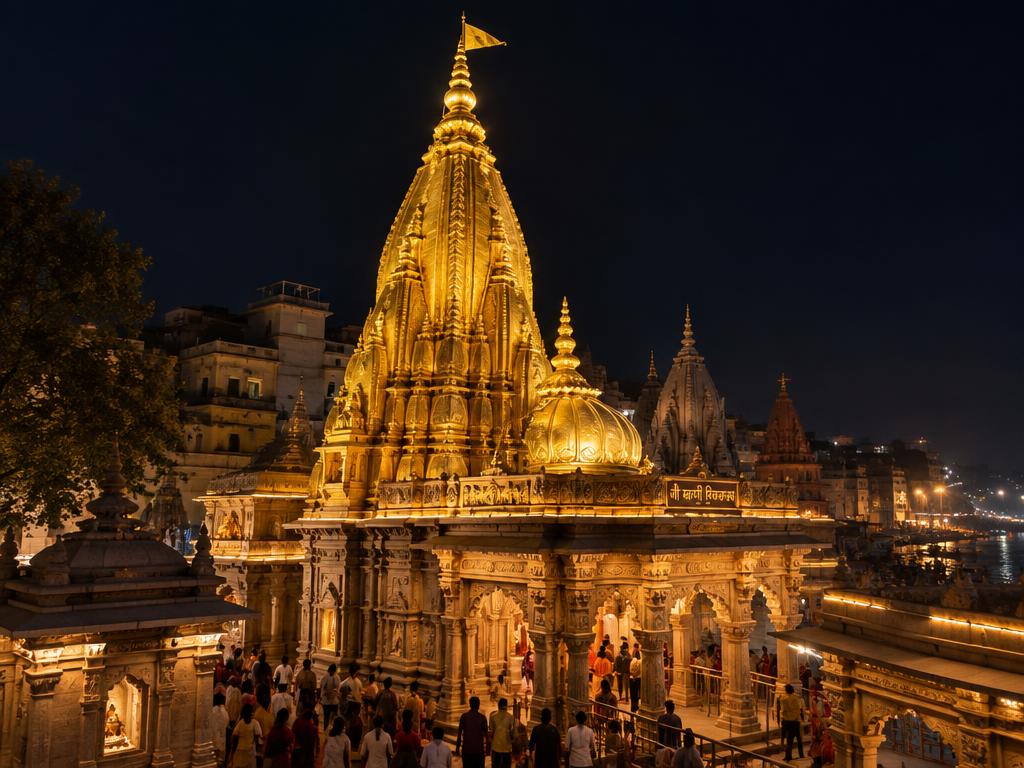
Temple
Kashi Vishwanath Temple
The golden temple of Lord Shiva on the Ganges' west bank — one of the twelve Jyotirlingas and the spiritual centre of the city. The new Vishwanath Corridor links it straight to the river.
Thousands of temples, eighty-four ghats, and one of the oldest living cities on Earth. Everything you need to visit, understand, and give back to the banks of the Ganga — in one place.
Varanasi — also called Kashi or Banaras — sits on the western bank of the Ganges in Uttar Pradesh, India. Regarded as the spiritual capital of Hinduism, it is one of the world's oldest continuously inhabited cities, with roots stretching back over three millennia. Its narrow lanes, temple bells and evening aarti remain the heartbeat of an unbroken civilisation.
From the silk weavers of the old city to the scholars of Banaras Hindu University, and from Tulsidas's Ramcharitmanas to the classical Banaras gharana of music, the city blends sacred ritual with everyday life in a way found nowhere else.
The golden temple of Lord Shiva on the Ganges' west bank — one of the twelve Jyotirlingas and the spiritual centre of the city. The new Vishwanath Corridor links it straight to the river.
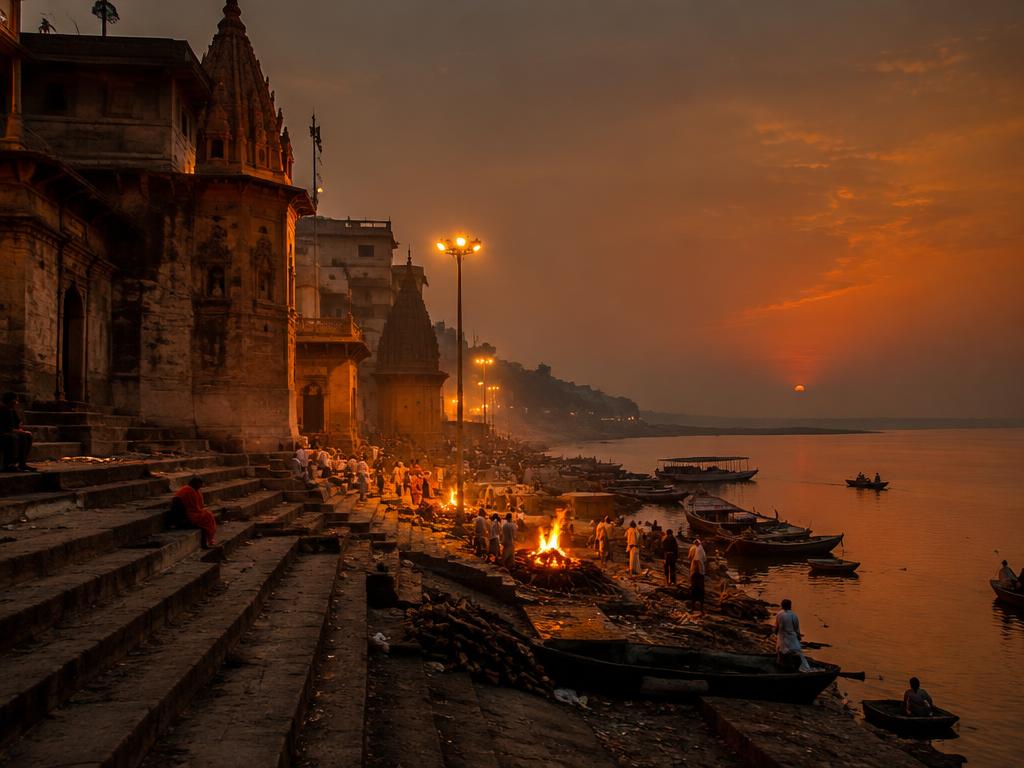
The city's principal cremation ghat, where sacred fires have burned without pause for centuries. A place of quiet reverence — photography is discouraged.
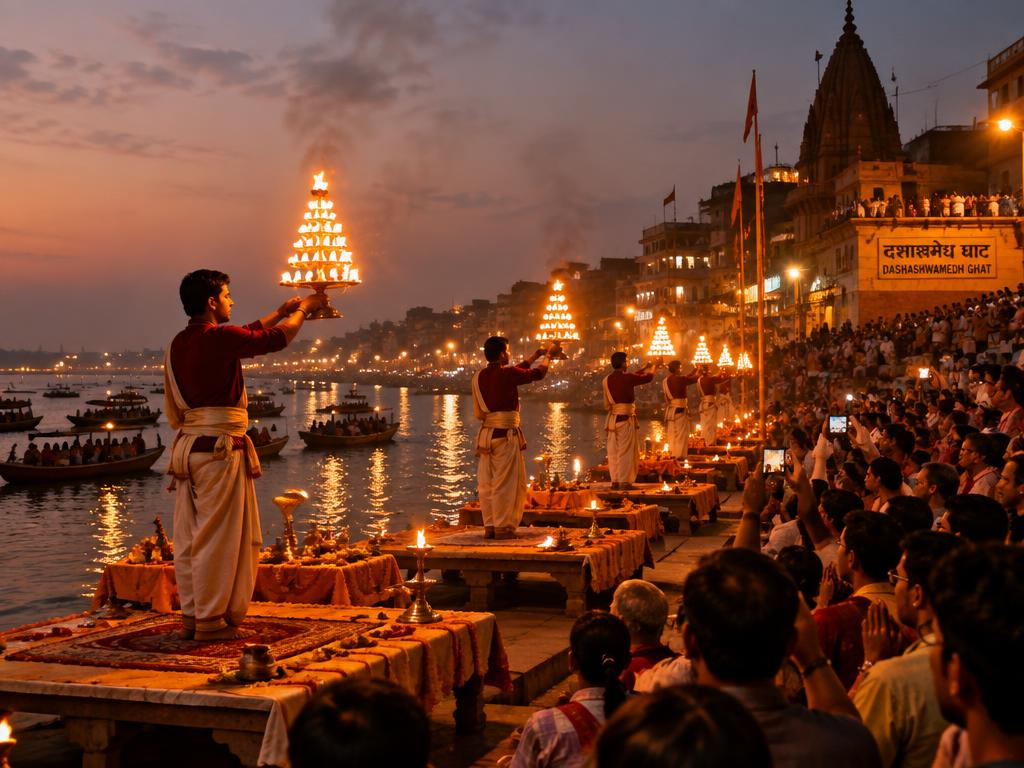
The most famous Ganga aarti, performed every evening around 6:30–7pm with towering brass lamps, conch shells and temple bells. Arrive an hour early or watch from a boat.
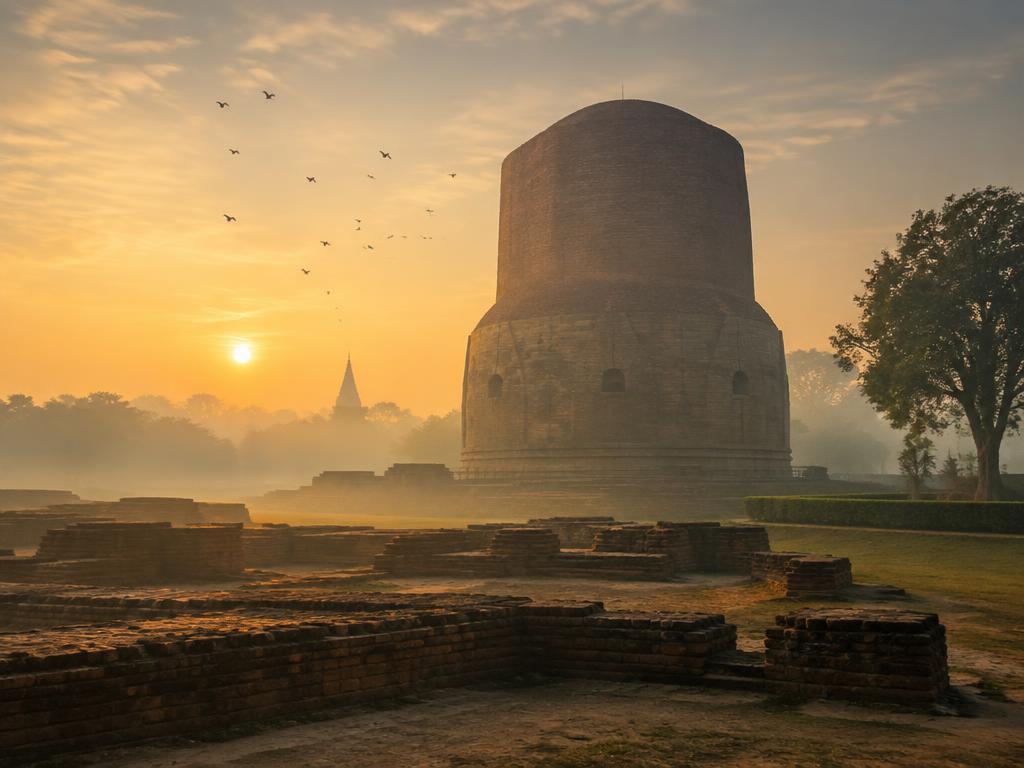
Ten kilometres from the city, this is where the Buddha delivered his first sermon. Home to the Dhamek Stupa and the museum holding the Lion Capital of Ashoka.
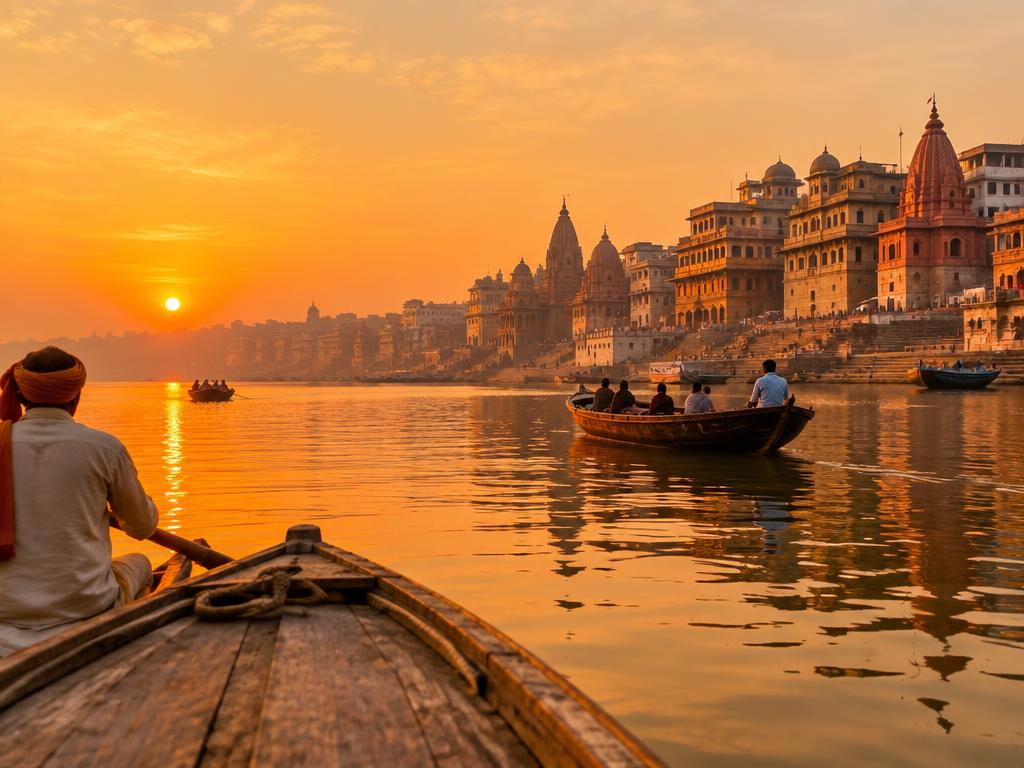
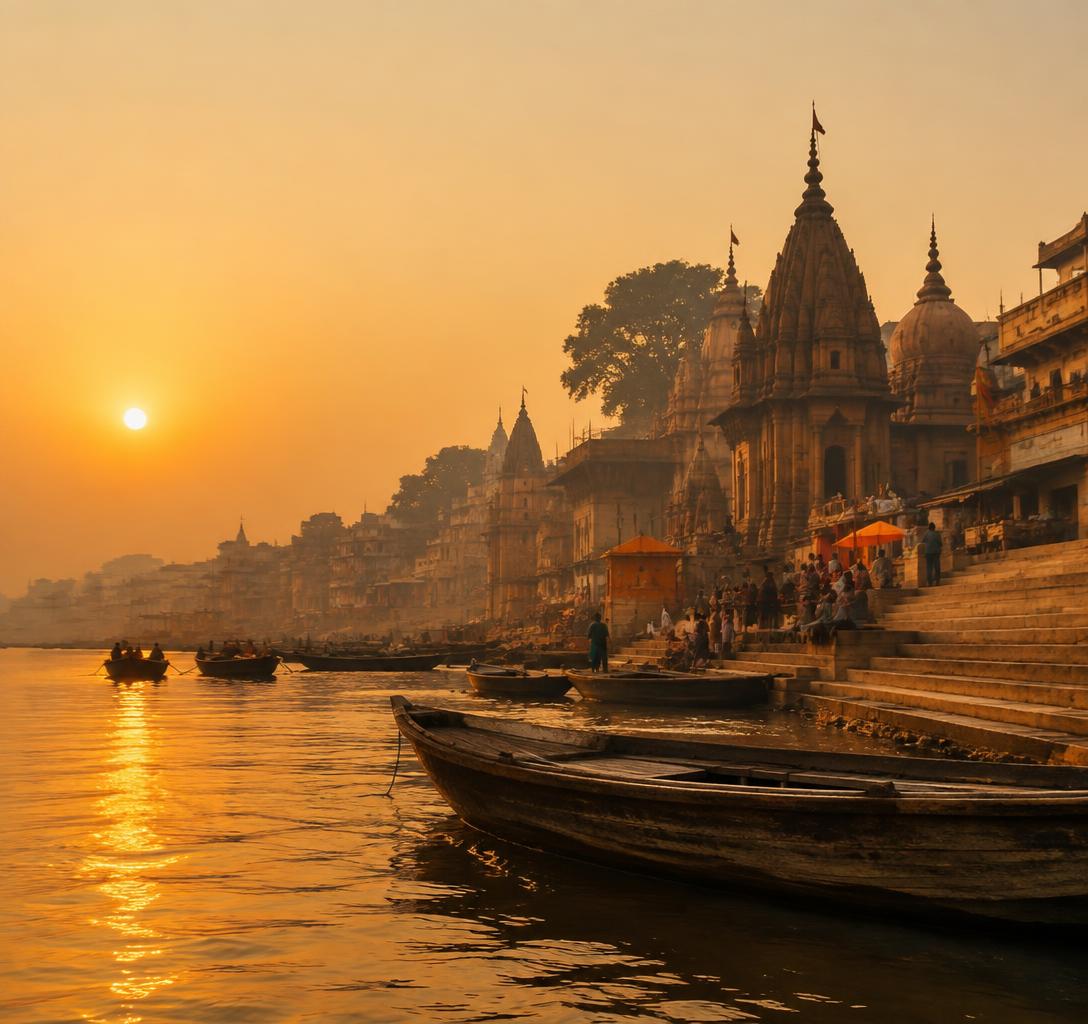
Drift past sleeping ghats and temple spires in a traditional wooden boat as the river turns gold. Best between 5:30 and 7am; agree the fare before boarding.
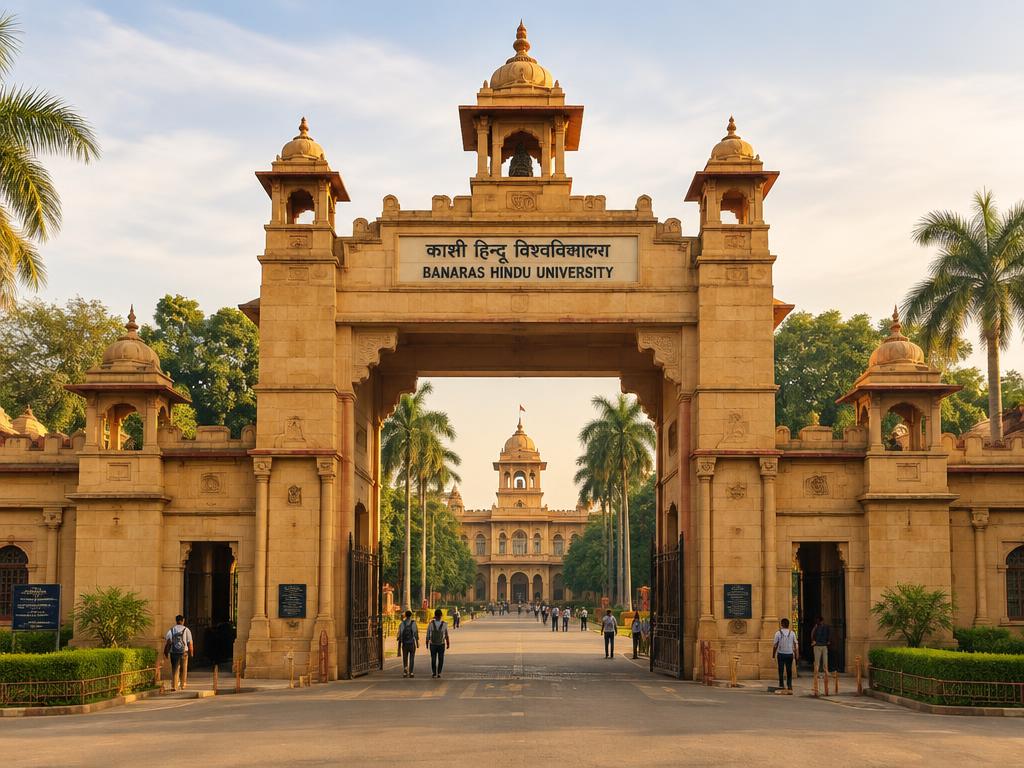
A vast campus founded in 1916 by Madan Mohan Malaviya, home to the New Vishwanath Temple, Bharat Kala Bhavan museum and sandstone halls set among gardens.
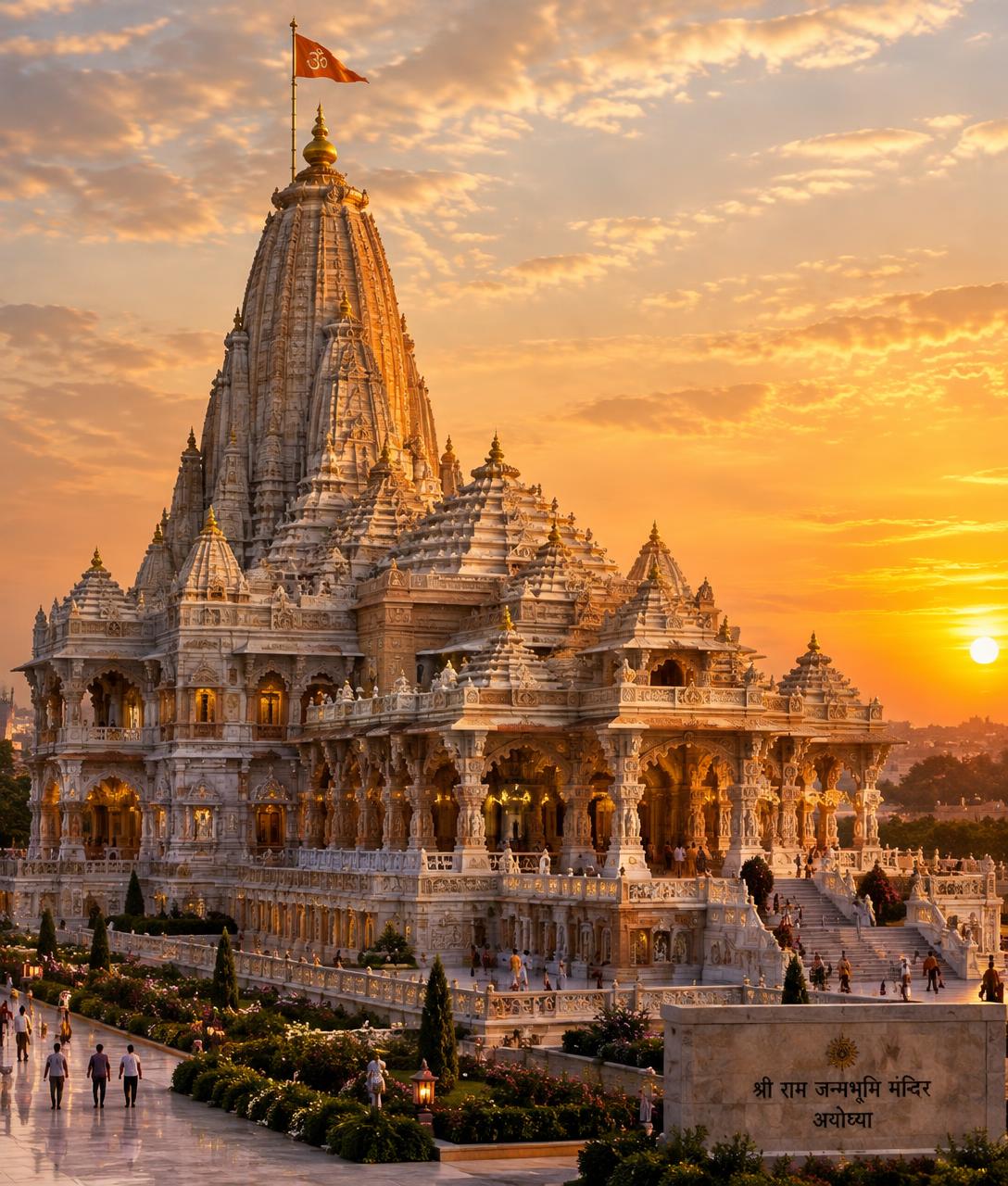
Built on the Ram Janmabhoomi site in Ayodhya, roughly 200 km from Varanasi, the Ram Mandir is a soaring temple in traditional Nagara style, carved in pink sandstone and marble. Consecrated in January 2024, it has quickly become one of India's most visited pilgrimage centres — and most Banaras itineraries now include it.
By air into Lal Bahadur Shastri Airport (VNS), 25 km from the centre. By rail to Varanasi Junction or Banaras station. Autos, cycle-rickshaws and boats cover the old city, where cars cannot go.
October to March brings cool, clear days. Dev Deepawali in November lights every ghat with lamps; Mahashivratri and Ganga Mahotsav are also major draws. Summers are very hot.
Ganga aarti at Dashashwamedh Ghat begins around 6:30–7pm (earlier in winter). A quieter morning aarti takes place at Assi Ghat around 5:30am. Timings shift with the season.
Kachori-sabzi and jalebi for breakfast, tamatar chaat, baati-chokha, malaiyo in winter, and a Banarasi paan to finish. Most of the old city is strictly vegetarian.
Banarasi silk sarees and brocade from Chowk and Madanpura, brass and copper puja ware from Thatheri Bazaar, and wooden toys and lacquerware near Kashipura.
Dress modestly at temples and remove shoes before entering. Do not photograph cremation ghats. Agree boat and rickshaw fares beforehand, and keep valuables close in crowded lanes.
Your contribution helps protect the ghats, fund riverfront cleanup drives, and support the artisans and pilgrims who keep this sacred city alive. Every donation matters.